


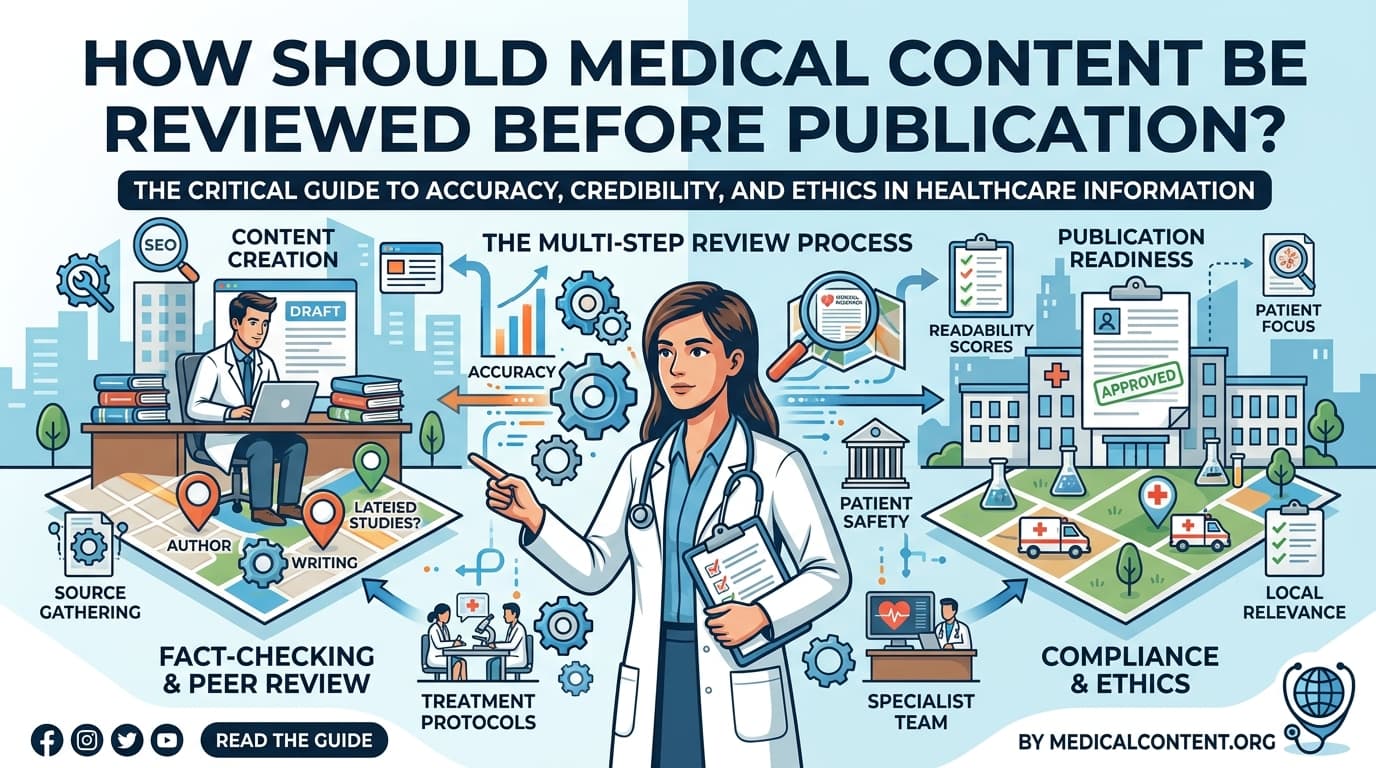
Medical website content should pass through evidence checks, clinical review, editorial checks and final approval before it goes live. Each stage needs a clear owner, so the person publishing the page knows which version has been approved.
For a clinic or healthcare practice, this applies to more than blog posts. Treatment descriptions, service pages, practitioner biographies and FAQs can all contain information that influences a patient’s decisions.
A practical medical website content review process helps your team catch unsupported claims, explain services clearly and keep published information accurate as circumstances change.
Who Should Review Medical Website Content?
Different reviewers should check different parts of a page. A writer can improve the wording, but clinical statements need someone qualified to assess them.
For a small practice, one person may handle several responsibilities. The important point is that clinical approval and website editing remain separate checks.
| Responsibility | Suggested owner | What they check |
|---|---|---|
| Draft preparation | Writer or content editor | Purpose, structure and supporting sources |
| Clinical review | Appropriately qualified clinician | Medical accuracy, limitations and patient safety |
| Service verification | Practice manager or service lead | Availability, fees, locations and booking arrangements |
| Editorial review | Content editor | Clarity, consistency and readability |
| Website checks | Website or SEO specialist | Links, layout, headings and enquiry routes |
| Publication approval | Named content owner | Completed checks and approved version |
The NHS website provides a useful example: its clinical content is checked by appropriately qualified clinicians, with final editorial checks forming a separate stage. A private practice can establish a proportionate process suited to its services.
Step 1: Define the Page’s Purpose
Before reviewing individual sentences, agree what the page should help the reader understand.
A treatment page might explain what a service involves and how to arrange a consultation. A practitioner profile should accurately describe qualifications and areas of practice. A location page should help patients find and contact the right clinic.
Write a short brief covering:
- Who the page is for.
- What question it should answer.
- Which services and locations it describes.
- What the reader should do next.
- Who will approve its clinical content.
This prevents the draft from expanding into medical advice that the page was never intended to provide.
Step 2: Identify Clinical Claims and Check Their Sources
Highlight statements about symptoms, diagnosis, treatment suitability, benefits, risks, recovery and expected outcomes.
For each significant claim, record its supporting source and ask whether the evidence applies to the treatment, patient group and context described.
Avoid using another clinic’s marketing page as the sole basis for a medical statement. Recognised clinical guidance and relevant research give the reviewer a stronger starting point.
For example, a sentence claiming that a procedure is suitable for everyone needs closer examination than a sentence explaining how to request an appointment. The reviewer may need to qualify the claim, replace it or remove it.
Keep the source record alongside the draft. This makes later checks easier when guidance changes or someone questions a statement.
Step 3: Arrange Clinical Review Before Final Approval
Ask a clinician with relevant expertise to review the medical information.
Their review should consider whether the page:
- Describes the treatment or condition accurately.
- Explains important limitations.
- Presents benefits and risks in a balanced way.
- Makes suitability dependent on appropriate assessment.
- Avoids promising a particular patient outcome.
- Includes relevant safety information where needed.
Clinical review should produce a clear decision: approved, approved subject to specified changes, or returned for revision.
An informal comment such as “looks fine” can leave uncertainty about what was checked. Record the reviewer, date and version they approved.
If later edits change the medical meaning, return those sections for clinical approval before publishing.
Step 4: Verify What the Practice Actually Offers
A page can be medically accurate and still mislead patients about the service available.
The practice manager or service lead should confirm operational details, including:
- Whether the treatment is currently offered.
- Which location provides it.
- Who delivers the service.
- Whether a referral or initial assessment is required.
- What the stated fee includes.
- How patients book or enquire.
Check practitioner titles and qualifications against verified information supplied by the practice.
For example, a website should not imply that every branch offers a specialist service when it is available at only one location.
Step 5: Make the Approved Information Easy to Understand
Once the clinical meaning is agreed, review how clearly the page communicates it.
Explain necessary medical terms when they first appear. Break up long paragraphs and organise information around the questions patients are likely to have.
Pay particular attention to wording about eligibility, preparation, costs and next steps. Readers should not need to interpret vague phrases to understand what happens after they contact the practice.
Your healthcare website service page structure should also make important information easy to find. A clear layout helps patients move from understanding the service to arranging an appropriate enquiry.
Any substantial simplification of clinical wording should be checked again to ensure it preserves the approved meaning.
Step 6: Check the Page in Its Final Website Layout
Review the page as visitors will see it, including on mobile.
Check that:
- Headings follow a clear order.
- Links lead to the correct pages.
- Important information is visible and readable.
- Images and captions accurately support the text.
- Contact details match the service location.
- Booking buttons lead to the intended destination.
- Titles and descriptions reflect the approved content.
Review FAQs, image text and search descriptions too. An approved body paragraph does not make an exaggerated headline acceptable.
SEO edits should support clarity. If adding a keyword makes a medical statement broader or less accurate, revise the wording.
Step 7: Record Approval and Set the Next Review
Before publication, confirm that all required changes have been completed in the final version.
A simple review record can contain:
| Field | What to record |
|---|---|
| Page | Title and URL |
| Owner | Person responsible for maintaining it |
| Clinical reviewer | Name and relevant role |
| Sources | Evidence used for clinical statements |
| Approval | Date and approved version |
| Next review | Planned date |
| Earlier review triggers | Changes that require immediate reassessment |
Choose the review schedule according to the content’s risk and how quickly its information may change. Do not wait for the scheduled date if a treatment, service or relevant guidance changes.
Where appropriate, display an accurate review date and reviewer information. Updating the date should reflect a real review of the content.
Example: Reviewing a Private Clinic Treatment Page
Suppose a clinic is preparing a new treatment page.
The writer drafts the explanation and records sources for its clinical claims. A clinician checks suitability, benefits, risks and limitations. The practice manager confirms the treatment location, consultation arrangements and fees.
The editor then improves readability without changing the approved meaning. The website team checks the mobile layout, links and enquiry route.
Finally, the content owner confirms that the published version matches the approved draft and records when it should be reviewed again.
This gives the clinic a repeatable workflow for future pages.
Common Medical Content Review Mistakes
The most avoidable mistakes are publishing before clinical approval, changing approved claims during SEO editing and relying on outdated service information.
Another common problem is treating a disclaimer as a substitute for accurate content. A disclaimer does not correct a misleading treatment description.
AI-assisted drafts also need the same checks as other drafts. Fluent wording should not be treated as evidence that a medical statement is accurate.
Keep review responsibilities clear, and make it easy for staff to flag information that needs correction after publication.
Build Content Review Into Your Healthcare SEO Workflow
A dependable review process should be part of maintaining your healthcare website.
At Big Ben SEO, our healthcare SEO services support content structure, search targeting and website improvements. Your appropriately qualified healthcare team should approve clinical statements.
Agreeing those responsibilities early helps your team publish useful pages with fewer last-minute revisions and a clear record of what has been checked.
Frequently Asked Questions
Does every medical website page need clinical review?
Pages containing clinical information should receive appropriate clinical review. A purely administrative page may only need operational and editorial checks, but treatment claims within it still need clinical attention.
Can an SEO agency approve medical information?
An SEO agency can check structure, search relevance and website presentation. Clinical approval should come from an appropriately qualified reviewer with expertise relevant to the content.
How often should medical website content be reviewed?
Use a planned schedule based on the content’s risk and likelihood of changing. Review earlier when clinical evidence, services, practitioner details or patient feedback indicate a problem.
Should we show who reviewed the content?
Where appropriate, identify the clinical reviewer and their relevant role. Only display genuine review information that accurately describes the work completed.
Do small wording changes require another clinical review?
Changes affecting benefits, risks, suitability or other medical meaning should return to the clinical reviewer. Routine formatting changes can follow your documented editorial process.
You may also find useful: What Makes a Healthcare Website Easier to Trust? and How Should Healthcare Websites Organise Their Service Pages?.